Field Guide40 field notes31 trainer questions
Read a place like a local.
The details that give a country away — driving side, roof pitch, post boxes, scripts and the way a street is built. Learn the note, then prove it on a real photo.
— learned Best — Drill —
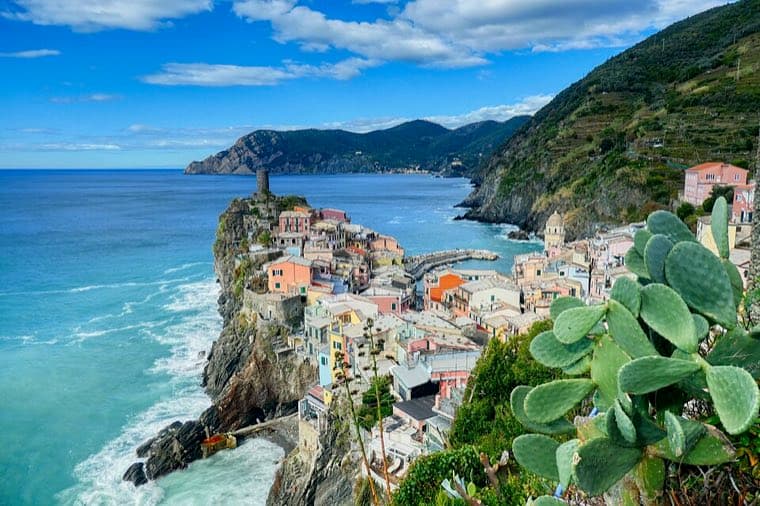
Cliffs & colour
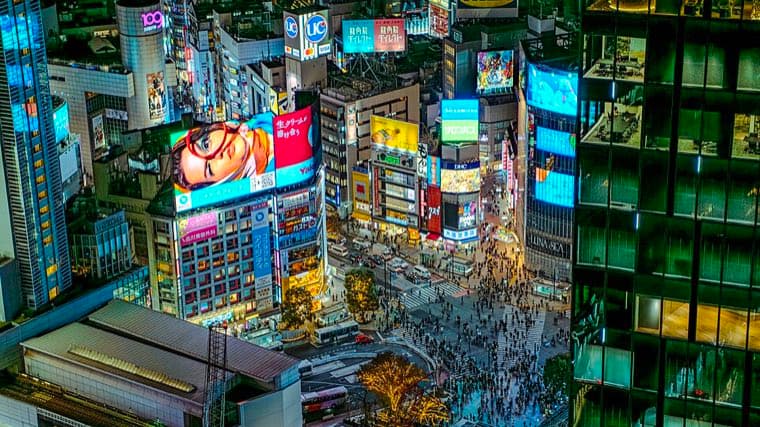
Wires & signage
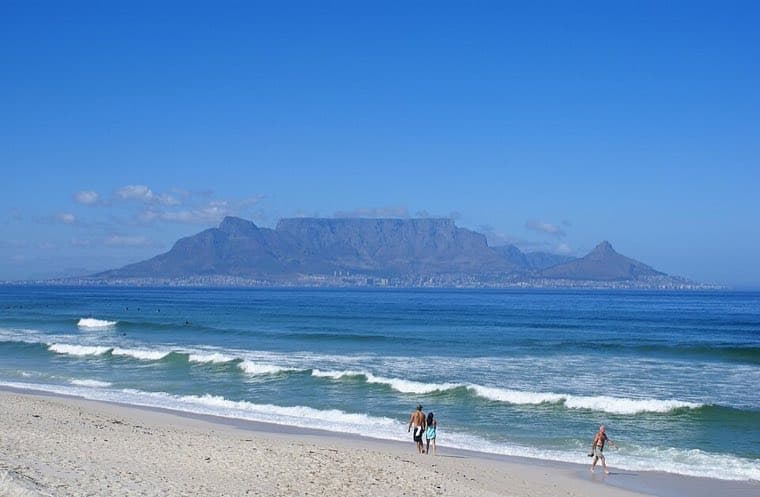
Coast & climate
Photos: Wikimedia Commons contributors
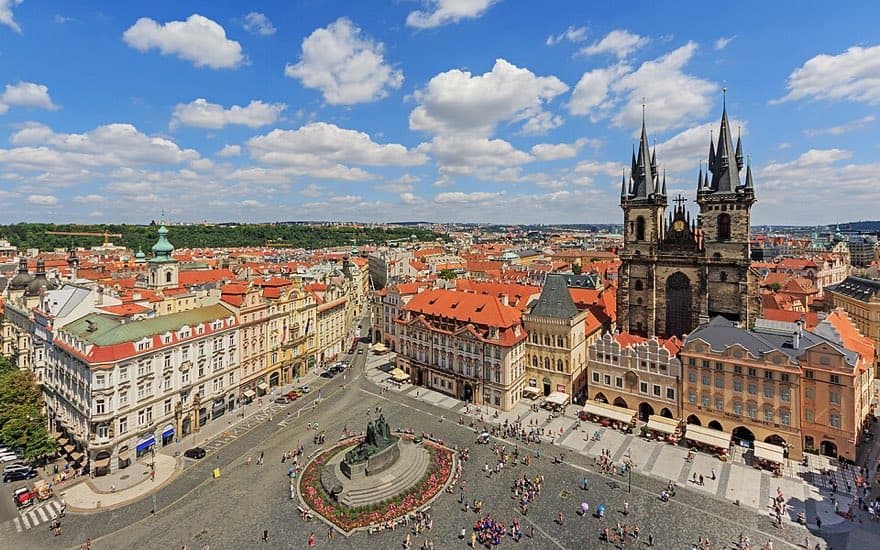
Pattern of the day
A.Savin · FAL
Signs & platesUseful
The word on the stop sign
STOP, PARE or ALTO?
STOP is used across most of Europe, Africa, Asia and the English-speaking world. Brazil, Argentina, Chile and Uruguay use PARE. Mexico, Central America, Colombia, Peru and Venezuela use ALTO. Spain and Portugal use STOP. The octagon stays the same; the language tells you which cultural sphere the road network came from.
Where: PARE: Brazil, Argentina, Chile, Uruguay, Paraguay. ALTO: Mexico, Central America, Colombia, Peru, Venezuela. STOP: Spain, Portugal and most other places.
Your field notes
0of 40 learned
Trainer best
—
Photo drill best
—
40 of 40
RoadsStarter
Which side are they driving on?
Look at parked cars, lane position or a car's steering wheel.
Left-hand traffic is the single highest-value clue in a photo. Cars keep left, the steering wheel is on the right, and pedestrians tend to look right first when crossing. Roughly a third of the world drives on the left, but it is concentrated in a few unmistakable blocks: the UK and Ireland, Japan, Australia and New Zealand, India and its neighbours, most of southern and eastern Africa, and much of South-East Asia.
Where: Left: UK, Ireland, Japan, Australia, NZ, India, Pakistan, Bangladesh, Sri Lanka, Nepal, Bhutan, Malaysia, Singapore, Indonesia, Thailand, Kenya, Tanzania, Uganda, South Africa, Namibia, Botswana, Zimbabwe, Zambia, Malawi, Mozambique, Lesotho, Eswatini, Mauritius, Seychelles, Jamaica, Trinidad, Guyana, Suriname, Fiji, Samoa, Tonga, PNG, Solomon Islands. Right: everywhere else, including the Americas, China, Korea, Vietnam, the Philippines and continental Europe.
RoadsUseful
Read the centre line
Is the line between opposing lanes yellow or white?
Yellow centre lines are the norm in the United States, Canada and much of Latin America. White centre lines dominate in Europe, Africa and most of Asia. A double yellow usually means no overtaking; a broken white line usually permits it. In the UK, yellow lines at the kerb mean parking restrictions rather than lane divisions.
Where: Yellow: North America, Brazil, much of Spanish-speaking America. White: Europe, Africa, India, China, Japan, Australia.
RoadsStarter
Give way, yield, or stop?
Look at the shape and text of the junction sign.
An inverted red triangle with a white centre is a give-way / yield sign across Europe and much of the Commonwealth. The United States and Canada use a red-and-white triangle reading YIELD. A red octagon reading STOP is close to universal, but the word changes: PARE in Brazil and much of Latin America, ALTO in Mexico and parts of South America, and STOP almost everywhere else.
Where: Useful across Europe, the Americas and former British territories. Sign shape beats language when you cannot read the text.
RoadsUseful
Horizontal or vertical lights?
Are the traffic lights hanging horizontally or standing vertically?
Horizontal signal heads are common in the United States, Canada and Japan, often suspended over the road on a mast arm or wire. Vertical heads on a pole are the norm in most of Europe and much of the rest of the world. The colour order is not a reliable country clue on its own, but the mounting hardware is.
Where: Horizontal: US, Canada, Japan. Vertical: Europe, Africa, most of Asia, Latin America (with local exceptions).
RoadsNerdy
Roadside posts and reflectors
Are there white marker posts, snow poles or reflector studs?
White edge posts with a black band and a reflector are widespread in Europe. Snow poles — tall orange or red-topped stakes — appear where ploughs need to find the road in Scandinavia, the Alps and northern Japan. Reflective road studs are common in the UK and parts of Europe and Australia; they are less common in mainland North America.
Where: Snow poles: Norway, Sweden, Finland, Iceland, Alpine countries, Hokkaido. White edge posts: UK, Ireland, France, Germany and neighbours.
RoadsUseful
Roundabouts give away the region
Frequent roundabouts? Which way is traffic circulating?
Roundabouts are dense in the UK, Ireland, France, Spain, Portugal and Australia. In left-driving countries traffic circulates clockwise and you give way to the right; in right-driving countries it circulates anticlockwise and you give way to the left. The US has fewer roundabouts and often uses four-way stop signs instead.
Where: UK, France, Spain, Australia: many. US, Canada: fewer, with regional exceptions. France also has priority-to-the-right junctions in older towns.
RoadsStarter
Speed limit sign grammar
Circle or rectangle? Red ring or plain white?
A white circle with a red ring and a number is the European default. US and Canadian speed limits are usually black text on a white rectangle, often with the word SPEED LIMIT or MAXIMUM. Australia uses a red-ring circle like Europe. Yellow diamond warning signs are North American; red triangles are European.
Where: Red-ring circles: Europe, Australia, much of Africa and Asia. White rectangles: US, Canada. Yellow diamonds: US, Canada, and some Latin American countries.
Signs & platesStarter
Number plates are a passport
Colour, shape and any blue band on the plate?
EU-style plates carry a blue band with the country code on the left and are usually white with black text. UK rear plates are yellow; front plates are white. US and Canadian plates are often state- or province-specific and can be almost any colour. Japanese plates are white with green text for private cars and yellow with black text for kei cars. Long, narrow white plates are common in much of Europe and Japan; wide, tall plates in North America.
Where: Blue EU band: most EU members. Yellow plates: UK (rear), Netherlands, Luxembourg. White/green: Japan. State designs: US, Canada, Mexico, Australia. Country code letters are often printed on the plate itself.
Signs & platesUseful
Post boxes and mail colours
Look for the letterbox on a street corner.
The classic red pillar box is British, and also appears in former British territories. Ireland's boxes are green. Germany and Switzerland use yellow, France yellow, Italy red, Japan red, the US blue, and Canada red. Australia uses red pillar boxes. The box colour is a strong clue but colonial history means it can travel.
Where: Red: UK, Australia, Italy, Japan, Canada, many former British colonies. Green: Ireland. Yellow: Germany, Switzerland, France. Blue: United States.
Signs & platesUseful
The word on the stop sign
STOP, PARE or ALTO?
STOP is used across most of Europe, Africa, Asia and the English-speaking world. Brazil, Argentina, Chile and Uruguay use PARE. Mexico, Central America, Colombia, Peru and Venezuela use ALTO. Spain and Portugal use STOP. The octagon stays the same; the language tells you which cultural sphere the road network came from.
Where: PARE: Brazil, Argentina, Chile, Uruguay, Paraguay. ALTO: Mexico, Central America, Colombia, Peru, Venezuela. STOP: Spain, Portugal and most other places.
Signs & platesNerdy
Emergency vehicles and uniforms
What colour are police cars, ambulances and fire engines?
Police cars are often white with blue or green markings in Europe, black-and-white in the US and Canada, and white with blue in Japan. French police cars are white with red-and-blue markings; Italian Carabinieri vehicles are dark blue with red stripes. UK police cars use high-visibility yellow-and-blue Battenburg markings. Treat uniforms cautiously: many countries share styles, and private security can look similar.
Where: Battenburg yellow/blue: UK. Black-and-white: US, Canada, Japan (white/black). Dark blue with red: Italy. White with red/blue: France, Spain, much of Europe.
BuildingsStarter
Roof pitch tells a climate story
Is the roof steep, shallow, flat or corrugated?
Steep roofs shed snow and rain: look for them in the Alps, Scandinavia, Scotland and northern Japan. Shallow roofs suit mild, dry climates such as the Mediterranean and the Middle East. Flat roofs are common in arid North Africa, the Gulf and parts of Latin America. Corrugated metal is the workhorse roofing of much of sub-Saharan Africa, South-East Asia and rural Latin America.
Where: Steep: Alpine Europe, Scandinavia, Japan, New Zealand. Flat: North Africa, Middle East, Mexico. Corrugated metal: sub-Saharan Africa, South-East Asia, Pacific islands.
BuildingsStarter
Walls: whitewash, brick or timber?
What are the buildings made of, and how are they finished?
Whitewashed cubic houses with blue doors and shutters are the Cycladic signature of Greece; whitewash and flat roofs also appear across North Africa and southern Spain. Red brick and dark slate are strongly British and Dutch. Timber-framed houses with painted boards are Nordic and Alpine. Timber framing with visible dark beams is central European. Precast concrete panel blocks are a legacy of post-war eastern Europe.
Where: Blue-and-white cubes: Greece. Red brick terraces: UK, Netherlands, Belgium. Timber and painted clapboard: Norway, Sweden, Finland, New England. Panel blocks: Poland, Czechia, Slovakia, Hungary, Romania, the Baltics, ex-USSR.
BuildingsUseful
Windows, shutters and balconies
Are there shutters, balconies with laundry, or bay windows?
External shutters are common in southern Europe, North Africa and much of Latin America, where they keep the sun out. Bay windows and sash windows are a British and Irish terrace signature; wide timber porches are North American. Balconies with laundry and potted plants are everyday in Mediterranean, Middle Eastern and South Asian cities. Barred ground-floor windows are common in Latin America and parts of Africa.
Where: Shutters: Spain, Italy, Portugal, Greece, Morocco, Mexico. Bay windows: UK, Ireland. Laundry balconies: Naples, Lisbon, Istanbul, Mumbai, Hong Kong.
BuildingsStarter
Domes, spires and minarets
Which religious silhouette is on the skyline?
Onion domes point to Orthodox Christianity, especially Russia, Ukraine and the Balkans. Tall slender minarets point to Islam across North Africa, the Middle East, Turkey and South Asia. Pagodas and tiered roofs point to East and South-East Asia. Stupas and bell-shaped shrines are Buddhist signatures in Nepal, Sri Lanka and South-East Asia. Gothic spires and towers point to western and central Europe.
Where: Onion domes: Russia, Ukraine, Belarus, Balkans. Minarets: MENA, Turkey, Iran, Pakistan, Indonesia. Pagodas: China, Japan, Korea, Vietnam, Myanmar. Stupas: Nepal, Sri Lanka, Thailand, Myanmar.
BuildingsUseful
The skyline is a decade
Low-rise, mid-rise or towers? What colour are they?
East Asian cities often mix dense low-rise neighbourhoods with clusters of very tall white or grey residential towers. Eastern European cities are ringed by repetitive five- to twelve-storey panel blocks. Latin American cities often have a dense low-rise core with towers in a few wealthy districts. Many African cities are predominantly low-rise with a fast-growing tower skyline in the largest business districts.
Where: White towers: China, Korea, Hong Kong, Singapore. Panel blocks: Poland to Russia. Low-rise: most of Africa and South Asia outside megacities.
LandscapeStarter
Plants are a climate map
What is growing, and how tall is it?
Conifers and birch mean boreal or mountain climates. Broadleaf oak, beech and maple mean temperate Europe, eastern North America or Japan. Olive, cypress and pine mean Mediterranean. Acacia and baobab mean savanna. Palms and broad-leaf evergreens mean the tropics or subtropics. Eucalyptus means Australia, and plantations of it appear in Portugal, Spain, Brazil and Israel.
Where: Boreal: Scandinavia, Canada, Siberia. Mediterranean: Mediterranean basin, California, Chile, South Africa, south-west Australia. Savanna: Africa, Brazil, northern Australia.
LandscapeNerdy
The sun tells you hemisphere
Which way do shadows fall at midday?
North of the Tropic of Cancer, midday shadows point north, so the sun is in the south. South of the Tropic of Capricorn, midday shadows point south, so the sun is in the north. Between the tropics it depends on the season. Without a compass this is hard to use directly, but a shadow falling towards the camera or away from it can rule out a hemisphere when you know the street orientation.
Where: Use outside the tropics; inside them, use vegetation and architecture instead.
LandscapeUseful
Snow is a latitude and altitude clue
Is there snow on roofs, ground, or only on peaks?
Snow on roofs and ground means a cold winter or high altitude; snow only on peaks means you are seeing the snowline. Tropical mountains can carry snow at high altitude while the valley is hot — Kilimanjaro, the Andes and the Himalayas. Snow that looks wet and heavy is typical of maritime climates; dry powdery snow and blowing crystals suggest continental or polar air.
Where: Roof snow: northern Europe, Canada, northern Japan, mountain towns. Peak-only snow: Andes, Himalaya, East African volcanoes.
LandscapeUseful
How does the water behave?
Muddy, clear, braided or dry?
Glacial rivers are often milky turquoise or grey from rock flour. Tropical rivers are often muddy brown. Braided channels with gravel bars suggest a cold or mountainous source. Dry wadis and arroyos suggest arid climates with flash floods. A wide river with heavy boat traffic is usually a historic transport corridor.
Where: Glacial turquoise: Iceland, Norway, New Zealand, Patagonia, the Himalaya. Muddy: Amazon, Ganges, Mekong, Congo. Dry wadis: North Africa, Arabia, south-west US.
LandscapeUseful
Coastline architecture
Fjords, cliffs, karst or atolls?
Steep fjords with waterfalls are the signature of Norway, Chile, New Zealand and Greenland. White chalk cliffs are the English Channel and parts of Denmark. Limestone karst towers rising from green water are South-East Asia and southern China. Coral atolls with turquoise lagoons are the Pacific and Indian Ocean. Mangrove coastlines are tropical and equatorial.
Where: Fjords: Norway, Chile, NZ, Greenland. Karst: Vietnam, Thailand, China, Indonesia, Philippines. Atolls: Maldives, Tuvalu, Kiribati, French Polynesia.
LandscapeNerdy
Soil and dust colour
Red, black, white or grey ground?
Deep red laterite soil is a tropical signature, especially in Brazil, India, Africa and northern Australia. Black volcanic soil appears in Iceland, Indonesia, Japan, Hawaii and the East African Rift. White sand beaches are common on coral islands; golden sand on continental coasts. Grey glacial till and moraine are northern and alpine.
Where: Red: Brazil, India, Kenya, Tanzania, northern Australia. Black volcanic: Iceland, Indonesia, Hawaii, Japan, Ethiopia. White coral sand: Maldives, Bahamas, Fiji.
LanguageStarter
Identify the script
What alphabet is on the signs?
Latin script covers most of Europe, the Americas, Africa and Oceania. Cyrillic covers Russia, Ukraine, Belarus, Bulgaria, Serbia, North Macedonia and much of Central Asia. Greek and Hebrew are unmistakable. Arabic script runs from Morocco to Iraq and is used for Persian and Urdu too. Devanagari covers Hindi and Nepali; Bengali, Tamil, Thai, Khmer, Lao, Myanmar and Sinhala each have their own. Han characters cover Chinese and Japanese; Hangul is Korean; kana are Japanese.
Where: Cyrillic: Russia, Ukraine, Belarus, Bulgaria, Serbia, North Macedonia, Kazakhstan, Kyrgyzstan, Mongolia. Arabic: North Africa, Middle East, Iran (Persian), Pakistan (Urdu). Devanagari: India, Nepal. Han: China, Japan, Singapore (simplified).
LanguageUseful
Little marks, big regions
Which accents and special letters appear?
ã and õ are Portuguese; ñ is Spanish; ü appears in German and Turkish; ø and å are Nordic; ł and ż are Polish; ř is Czech; ő and ű are Hungarian; ș and ț are Romanian; ç appears in French, Portuguese, Catalan and Turkish. A single place name can narrow a continent before you read a word.
Where: Portuguese: Portugal, Brazil, Angola, Mozambique. Spanish: Spain, Latin America. German: Germany, Austria, Switzerland. Polish: Poland. Czech: Czechia. Hungarian: Hungary. Romanian: Romania, Moldova.
LanguageUseful
Road words and shop words
What does the street sign say?
Rue, boulevard and place mean French; calle, avenida and plaza mean Spanish; rua and praça mean Portuguese; straße and platz mean German; via and piazza mean Italian; straat and plein mean Dutch; gata and torg mean Swedish; utca and tér mean Hungarian. Pharmacy signs are similarly distinctive: pharmacie, farmacia, apotheke, apteka, farmácia, Pharmacie, drugstore.
Where: Even one word can separate Spain from Portugal, or the Netherlands from Belgium.
LanguageStarter
Domain names are honest
Look at the URL on a poster, van or shopfront.
Country-code top-level domains are a strong, self-declared clue: .co.uk, .de, .fr, .es, .pt, .it, .nl, .be, .se, .no, .dk, .fi, .pl, .cz, .jp, .kr, .cn, .in, .au, .nz, .ca, .mx, .br, .ar, .za, .ng, .ke, .id, .sg, .my. A .com tells you almost nothing, but a ccTLD is a near-certain country signal — unless a company is using it for a marketing campaign.
Where: Global. Use it as a tiebreaker after architecture and street clues.
LanguageNerdy
Phone and address formats
What does a phone number or postcode look like?
Country codes narrow the country instantly when printed on a sign: +44 UK, +33 France, +49 Germany, +34 Spain, +39 Italy, +81 Japan, +61 Australia, +64 NZ, +91 India, +55 Brazil, +52 Mexico, +27 South Africa. Postcodes are also distinctive: UK letters-and-numbers, US five digits, Canada letter-digit-letter, Netherlands four digits plus two letters.
Where: Use on shopfronts, vans, posters and estate-agent boards.
Street lifeUseful
Wood, concrete or buried?
How are the electricity and phone lines carried?
Wooden utility poles with many wires are the North American, Canadian, Australian and rural European norm. Concrete poles are common in much of Europe, Japan and India. Dense overhead wiring with no poles visible at street level is a Japanese city signature. In the Netherlands, Singapore and parts of Germany, cables are usually underground and the street feels unusually clean.
Where: Wood: US, Canada, Australia, rural Europe. Concrete: Japan, India, much of Europe. Underground: Netherlands, Singapore, central Paris, newer districts worldwide.
Street lifeUseful
Benches, bins and bollards
What does the street furniture look like?
Bollards and bins are local design objects. The UK has red phone boxes and pillar boxes; France has the Morris column and green Wallace fountains; Germany has yellow post boxes and glass recycling containers; Japan has brightly designed manhole covers and vending machines on nearly every block; the US has fire hydrants in yellow, red or silver. Design consistency across a street is a strong regional signal.
Where: Vending machines: Japan, Korea, Taiwan. Hydrants: US, Canada. Morris columns: France. Red phone boxes: UK, Malta, Bermuda.
Street lifeUseful
Brands localise, signage does not
Which local chains and languages appear?
Global brands are everywhere, so they are weak clues. Local convenience chains, banks, pharmacies and telecoms are strong: 7-Eleven in Japan and Thailand, Lawson in Japan, Circle K in Scandinavia and Ireland, Migros and Coop in Switzerland, Spar across Europe, Woolworths in Australia and South Africa, Couche-Tard in Canada. The language mix on a shopfront often reveals a border region.
Where: Look for the small local logos rather than the global ones.
Street lifeNerdy
How do people cross?
Zebra stripes, signal boxes or painted lines?
Zebra crossings with wide white stripes and a Belisha beacon are British and Irish. Yellow school crossings and lollipop signs are also British. The US uses thick white transverse lines and often a pedestrian signal with a countdown. In much of Europe, a blue square sign marks a pedestrian crossing. In Japan, yellow-and-black striped crossings are common near schools.
Where: Zebra + beacon: UK, Ireland. Yellow school crossing: UK. Blue square sign: continental Europe.
Street lifeNerdy
Parking lines and kerb paint
What colour are the lines by the kerb?
Double yellow lines along the kerb mean no parking in the UK and Ireland. Single yellow means restrictions at certain times. In the US, red kerbs mean no stopping, yellow means loading, and blue means disabled parking. In parts of Europe, blue painted bays are paid parking. Kerb paint is a small detail that is surprisingly consistent within a country.
Where: Double yellow: UK, Ireland. Red/yellow kerbs: US. Blue bays: much of Europe.
Street lifeUseful
Bus stops and school buses
What does a bus stop or school bus look like?
Yellow school buses are a North American signature, and also appear in parts of Canada and Mexico. London's red double-decker buses are iconic but London-only. Many European cities use articulated trams and blue or white buses. Japanese bus stops often have precise timetables and covered shelters. In much of Africa and South Asia, minibuses and shared taxis fill the role.
Where: Yellow school bus: US, Canada. Red double-decker: London. Trams: central and eastern Europe, Melbourne, Tokyo, Istanbul.
PeopleUseful
Clothing is climate plus culture
What are people wearing in the street?
Heavy parkas, boots and hats suggest a cold winter; linen and light colours suggest heat. Long sleeves and trousers in hot climates can be sun protection or modesty norms. School uniforms are common in the UK, Ireland, Japan, Korea, Australia and much of Africa and South Asia, while North American public schools are more casual. Hijabs, kippahs, saris and other dress can narrow a region, but never assume a country from one person.
Where: School uniforms: UK, Ireland, Japan, Korea, Australia, India, Kenya. Parkas: Nordics, Canada, Russia, northern Japan.
PeopleUseful
Street food is geography
What is cooking, and how is it served?
Tacos al pastor on a vertical spit point to Mexico. Shawarma and falafel point to the Levant and Egypt. Banh mi baguettes point to Vietnam. Arepas point to Venezuela and Colombia. Chaat and dosa stalls point to India. Yakitori and ramen counters point to Japan. The combination of food, signage and queue culture is often stronger than the architecture.
Where: Use together with script and street furniture; food travels, cuisines cross borders.
PeopleNerdy
Market layout
Covered market hall, open-air stalls or a supermarket street?
Covered cast-iron market halls are common in western and central Europe, with older roots in Britain and France. Open-air markets spread across squares in southern Europe, North Africa and Latin America. Narrow alley markets with tarpaulins are common across South-East Asia. The presence of a covered hall versus informal stalls tells you about climate, planning and history.
Where: Cast-iron halls: UK, France, Spain, Portugal, Hungary. Alley markets: Bangkok, Hanoi, Hong Kong, Taipei. Open-air squares: Morocco, Mexico, Italy.
MethodStarter
The five-step guess
What order should you use under pressure?
1) Climate and landscape narrow the hemisphere and latitude. 2) Driving side and road furniture narrow the country bloc. 3) Script and language narrow the neighbourhood. 4) Architecture and street details narrow the country. 5) Brands, domains and uniforms narrow the city or region. Then pin a specific city or road, not a generic centre.
Where: Use every time you are stuck. The order matters more than any single clue.
MethodUseful
Do not trust the subject
Is the landmark the most useful part of the photo?
Iconic landmarks are photographed from every angle and sometimes reproduced in theme parks and museums. A half-size Eiffel Tower can be in Las Vegas, Macau or Tianducheng. Look at the people, cars, road signs and plants around the landmark. The best clue is often at the edge of the frame, not in the centre.
Where: Especially important for Eiffel Tower, Colosseum, Taj Mahal, Great Wall, Stonehenge and Sagrada Família photos.
MethodUseful
Build a distance sense
How far is 100 km on the map you are looking at?
The map is not the world. At the latitude of Paris, one degree of longitude is about 73 km; at the equator it is 111 km; at Reykjavik it is about 49 km. On a world map, a pin a centimetre off can be hundreds of kilometres away. Zoom in before you commit, and use the capital or a known city as a reference distance.
Where: Use the map scale and known distances: London–Paris ~344 km, New York–Washington ~330 km, Tokyo–Osaka ~400 km.
MethodStarter
When to hedge
Should you pin the country you know or the city you suspect?
If you recognise the country but not the city, pin its largest city or capital — that is usually where photos are taken, and it keeps you inside the country for partial credit. If you recognise the city, pin the central district. Never leave the pin in the ocean: a pin on land is almost always worth more than a pin at sea.
Where: Snap decisions in Photo Hunt. Accuracy compounds: a pin 300 km off still scores, a pin on another continent does not.
Learn a note, then spot it in a photo.
The trainer and the photo drill both use these same field notes.
Built from the same clue data as Photo Hunt.Play Photo Hunt